


PDRN & Polynucleotide Skin Boosters: The Regenerative Treatment London Is Turning to in 2026
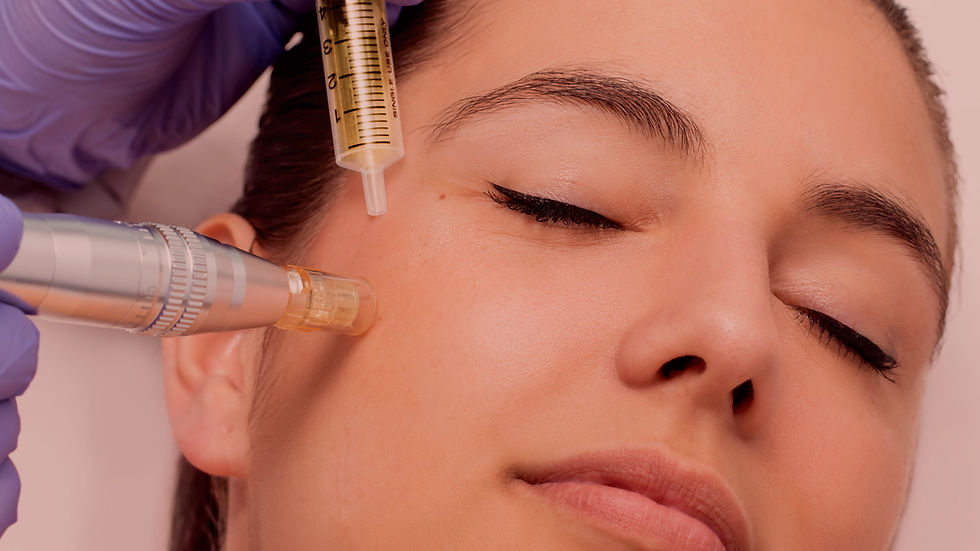
Quick Answer: PDRN (Polydeoxyribonucleotide) and polynucleotide skin boosters are the leading regenerative aesthetic treatment of 2026 — stimulating genuine cellular repair, collagen production, and deep skin hydration from within, rather than adding volume from outside. At Marques Therapy, 88 Southwark Bridge Rd, London SE1, PDRN treatments are delivered as part of a clinically led aesthetic programme — combining regenerative science with advanced skin peels and HIFU for comprehensive skin transformation.
Something significant has shifted in London's aesthetic landscape in 2026. The era of dramatic volume — oversized lips, heavy filler, the overdone look that defined much of the previous decade — is definitively over. In its place is a new clinical philosophy built around one word: regeneration.
Patients across London are now asking not for more volume, but for better skin. They want their skin to look healthier, more luminous, and more youthful because it genuinely is — not because something has been added to it. And the treatment leading that shift is polynucleotides.
What Are Polynucleotides and PDRN?
Polynucleotides are long-chain DNA fragments derived from purified salmon or trout DNA — which share a remarkably high compatibility with human DNA. PDRN (Polydeoxyribonucleotide) is a specific fraction of these polynucleotides, characterised by its particularly potent biological activity.
When introduced into the skin, polynucleotides and PDRN work by activating the A2A adenosine receptors on skin cells — triggering a cascade of regenerative activity:
Fibroblast proliferation — stimulating the cells that produce collagen and elastin to multiply and become more active
Neovascularisation — encouraging the formation of new capillaries, improving blood supply to the skin and restoring the vascular density that diminishes with age
Reduction of inflammatory mediators — directly reducing the chronic low-grade inflammation that accelerates skin ageing and contributes to sensitivity and reactivity
Deep hydration at the extracellular matrix level — attracting and binding water molecules in the dermis, producing a genuine plumping and hydrating effect that no topical moisturiser can replicate
The result is skin that is genuinely regenerated — not temporarily plumped, not superficially brightened, but structurally improved at the cellular level over a series of treatments.
Why Polynucleotides Are Dominating Aesthetic Medicine in 2026
The shift toward polynucleotides is not a trend in the superficial sense. It reflects a fundamental change in what patients want — and what the evidence supports.
The aesthetic industry has spent years dealing with the consequences of overuse of volumising fillers: migration, overcorrection, chronic inflammation, and the distinctly unnatural appearance that comes from adding volume where the problem is actually a loss of skin quality. Polynucleotides represent the correction: a treatment that addresses the root cause of facial ageing — the progressive loss of collagen, elastin, vascularity, and cellular regenerative capacity — rather than compensating for it with foreign material.
In 2026, leading aesthetic clinicians across the UK are positioning polynucleotides as the foundation of any serious skin health programme — typically used alongside collagen stimulators, HIFU, or radiofrequency treatments for comprehensive results.
For London's professional and image-conscious population — people who want to look genuinely well rather than obviously treated — polynucleotides deliver exactly that.
What PDRN Treatment Addresses
At Marques Therapy, PDRN skin boosters are indicated for a wide range of concerns:
Skin quality and texture — improving the overall quality of skin that has become rough, dull, or uneven through age, environmental exposure, or lifestyle. The regenerative effect on fibroblasts produces a sustained improvement in texture that becomes progressively more noticeable over the treatment course.
Fine lines and early wrinkle formation — polynucleotides address the dermal thinning and collagen loss that causes fine lines, producing a plumping and firming effect from within the skin rather than above it.
Skin laxity — by stimulating collagen and elastin production, PDRN progressively improves the skin's structural integrity and resistance to gravitational change — particularly effective in the lower face, neck, and décolletage.
Chronic dehydration — skin that is chronically dehydrated despite a consistent topical skincare routine often has a compromised extracellular matrix that cannot retain water effectively. PDRN restores this capacity at a level that moisturisers cannot access.
Hyperpigmentation and uneven tone — the anti-inflammatory action of polynucleotides reduces the activity of melanocytes stimulated by chronic inflammation, progressively improving uneven pigmentation and post-inflammatory marks.
Sensitive and reactive skin — PDRN's anti-inflammatory properties make it one of the only aesthetic treatments suitable for skin that is too reactive for more aggressive procedures. It calms, strengthens, and repairs the skin barrier rather than stressing it further.
Under-eye concerns — the periorbital area — dark circles, hollowness, and crepey skin under the eyes — responds particularly well to PDRN. The regenerative effect improves skin quality in an area where it is extremely thin and structurally complex.
Post-treatment recovery — PDRN accelerates healing and reduces inflammation following more aggressive treatments such as laser, chemical peels, or microneedling — making it an ideal complementary treatment in any aesthetic programme.
The PDRN Treatment Experience at Marques Therapy
Treatment begins with a clinical consultation and skin assessment to understand your specific concerns, skin type, and the programme most appropriate for your goals. PDRN is administered as a series of microinjections across the treatment area, using ultra-fine needles to deliver the polynucleotides precisely into the dermis.
The treatment takes 30–45 minutes. Some clients experience mild redness and pinpoint swelling immediately after treatment — this typically resolves within a few hours. There is no significant downtime, and most clients return to normal activities the same day.
Results from polynucleotide treatment are progressive rather than immediate. The regenerative process takes time — fibroblasts need to proliferate, new collagen takes weeks to form, and neovascularisation develops over months. Clients typically notice an initial improvement in hydration and skin quality within two to three weeks, with more significant structural changes developing over a course of three to four sessions spaced four weeks apart.
Maintenance sessions every three to six months sustain and build on the results. Unlike volumising fillers, the improvements from polynucleotides are cumulative — each course builds on the tissue quality established by the last.
Combining PDRN With Other Treatments at Marques Therapy
PDRN skin boosters deliver their best results as part of a structured, multi-modality aesthetic programme. At Marques Therapy, they are frequently combined with:
HIFU — targeting the deep structural layer (SMAS) for lifting and definition, while PDRN addresses skin quality and dermal regeneration simultaneously. These two treatments work at different tissue depths and complement each other perfectly.
Morpheus8 — radiofrequency microneedling for skin remodelling and tightening, combined with PDRN to accelerate post-treatment healing and amplify collagen stimulation.
Advanced skin peels — improving surface texture and pigmentation while PDRN works at the deeper dermal level — addressing both the surface and structure simultaneously.
Korean Skin Special Saturday — Marques Therapy's signature Saturday treatment protocol, which incorporates PDRN skin boosters alongside targeted brightening and resurfacing treatments for a comprehensive skin reset.
Serving London's Skin-Conscious Clients
Marques Therapy is located at 88 Southwark Bridge Rd in SE1 — five minutes from London Bridge and Borough stations, with easy access from Waterloo, the City of London, Bermondsey, Elephant & Castle, and Canary Wharf. The clinic serves professionals, athletes, and aesthetic clients across South and Central London who want clinical quality and genuine results.
For clients across London who have been told their skin concerns require surgery, or who have tried multiple products and treatments without satisfactory results — PDRN polynucleotides represent the category of treatment that was previously unavailable to them.
Frequently Asked Questions
Q: How is PDRN different from hyaluronic acid skin boosters like Profhilo? A: Hyaluronic acid skin boosters primarily provide hydration and a temporary plumping effect through water attraction. PDRN goes further — stimulating genuine cellular regeneration, fibroblast activity, and collagen synthesis. The effects are longer-lasting, more structural, and continue to improve after the treatment course has ended, as the regenerative process continues within the tissue.
Q: Is PDRN treatment painful? A: The treatment involves a series of small injections, which cause minimal discomfort. Topical numbing cream is applied prior to treatment to ensure the experience is comfortable. Most clients describe it as very manageable.
Q: How soon will I see results? A: Initial improvements in hydration and skin quality are typically visible within two to three weeks. More significant structural improvements in collagen density, firmness, and tone develop over the full treatment course and continue for several months after the final session.
Q: How many sessions do I need? A: A typical PDRN programme consists of three to four sessions spaced four weeks apart. Maintenance sessions every three to six months sustain and build on the cumulative improvements.
Q: Can PDRN be used anywhere on the face and body? A: Yes. PDRN is effective on the face, neck, décolletage, and hands — the areas most visibly affected by skin ageing. It is also used under the eyes and in the periorbital area, where many other treatments are contraindicated.
Q: Is polynucleotide treatment suitable if I have sensitive or reactive skin? A: Yes — PDRN is one of the most appropriate aesthetic treatments for sensitive skin, due to its anti-inflammatory action and its role in repairing the skin barrier rather than stressing it.
Q: How do I book? A: Book directly on WhatsApp: wa.me/+447746252075. You can also book online at marquestherapy.com.
Book Your PDRN Skin Consultation
Marques Therapy 88 Southwark Bridge Rd, London SE1 0EX 5 minutes from London Bridge and Borough stations | Near Borough Market Serving SE1, Southwark, Bermondsey, Waterloo, Elephant & Castle, and the City of London
Sosthenes Marques — Sports Therapist & Aesthetic Specialist | 20+ years of experience | London SE1


Comments