


Tension Headaches Caused by Neck Pain: Why Painkillers Aren't Solving It and What Actually Does
- Apr 20
- 6 min read
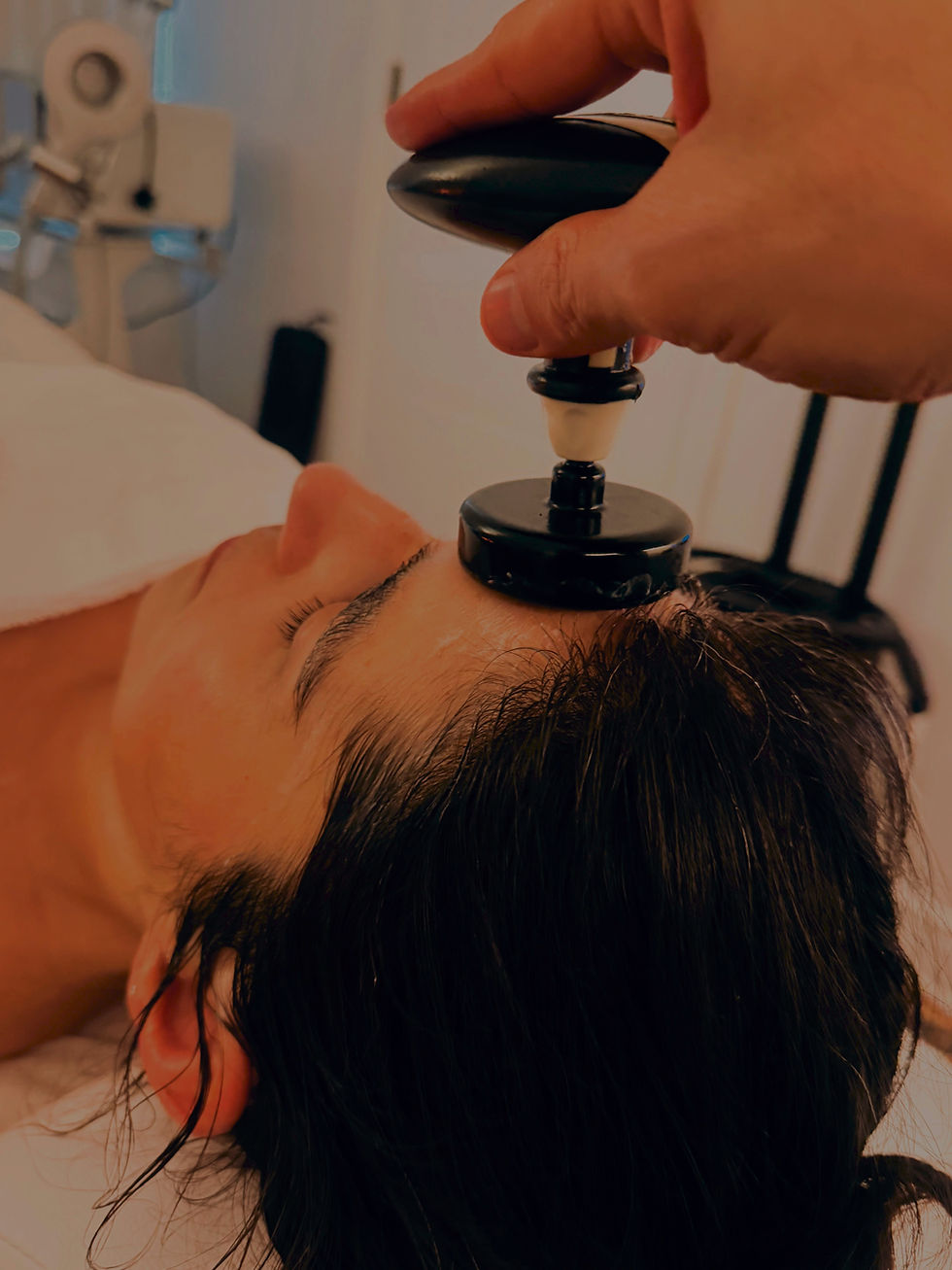
Quick Answer: Most chronic tension headaches and migraines don't originate in the head — they are caused by trigger points and joint restriction in the cervical spine and upper neck muscles, which refer pain upward into the skull. At Marques Therapy, 88 Southwark Bridge Rd, London SE1, sports therapist Sosthenes Marques uses dry needling, cervical mobilisation, and TECAR therapy to address the structural drivers of tension headaches and migraines — producing lasting resolution for London professionals who have been managing the same headache pattern for months or years.
Why Most Tension Headaches Start in the Cervical Spine
The term "tension headache" describes the sensation — a band-like tightness around the head. What it doesn't describe is the cause. And for the majority of people who experience them regularly, the cause is structural, not vascular or neurological.
The suboccipital muscles — four small muscles at the base of the skull that connect the top of the cervical spine to the occiput — are among the most commonly overlooked structures in the body. They govern fine movement of the head, are densely packed with sensory receptors, and are exquisitely sensitive to sustained posture. In people who spend hours looking at screens, these muscles are almost permanently overloaded.
When they develop trigger points — tight, hypersensitive knots of contracted muscle fibre — they refer pain in a characteristic pattern: upward over the back of the skull, around the side of the head, and behind the eye. This pattern is identical to what most people call a tension headache. The pain is in the head. The problem is in the neck.
The cervical facet joints compound this. These small joints at each level of the cervical spine govern neck movement and, when restricted, generate referred pain patterns into the head that are indistinguishable from classic tension headache. C1-C2 restriction typically refers to the top and back of the head. C2-C3 restriction refers to the base of the skull and behind the ear. C3-C4 to the neck and shoulder. Any combination of these can be present simultaneously.
Painkillers manage the output of this system. They do nothing to address the trigger points or the joint restriction generating it.
The Role of Screen Posture in Cervicogenic Headache
London is a city of screens. Whether you work in finance in the City, law in Waterloo, tech in Southwark, or any of the thousands of desk-based roles that fill SE1 and the surrounding area, the majority of your working hours involve a head position that is biomechanically costly.
Forward head posture — where the head sits in front of the shoulder line rather than balanced over it — changes the load on the cervical spine dramatically. For every inch the head moves forward, the effective weight it places on the cervical spine approximately doubles. The suboccipital muscles that hold the head up work harder. They fatigue. They develop trigger points. And the headache cycle begins.
This is why your headaches are worse on busy work days and better at weekends. It's why a holiday sometimes resolves them completely, and why they return within the first week back at your desk.
How Clinical Treatment Resolves the Pattern
At Marques Therapy, cervicogenic headache is treated through a structured approach that addresses both the muscular and joint components of the problem.
Dry needling: The most direct and effective treatment for suboccipital and upper cervical trigger points. A fine needle is inserted precisely into the trigger point, producing a localised twitch response that immediately reduces the hypertonic muscle activity driving the referral pattern. Most clients notice a significant reduction in headache intensity and frequency within two to three sessions. Many describe it as the first treatment that has produced a clear, lasting change in their headache pattern.
Cervical joint mobilisation: Specific manual techniques applied to the restricted cervical facet joints to restore their normal range of movement. When restricted joints regain mobility, the referred pain they generate reduces and the surrounding muscles no longer need to compensate. Mobilisation is applied gently and specifically — targeted at the exact levels identified as restricted during assessment.
TECAR therapy for the cervical and upper thoracic spine: TECAR (Transfer of Energy Capacitive and Resistive) uses diathermy technology to deliver deep thermal energy directly into the cervical musculature — stimulating cellular repair, increasing local circulation, and reducing the chronic muscle hypertonia that sustains the headache and migraine cycle. Applied to the suboccipital muscles, upper trapezius, sternocleidomastoid, and cervical paraspinals, TECAR therapy reaches deeply embedded tension that is often resistant to manual techniques alone. It accelerates tissue recovery, reduces neurological sensitisation in the cervical region, and makes the spine significantly more responsive to joint mobilisation and dry needling — making it particularly effective for clients whose headaches have a migraine component.
Postural and movement guidance: Specific advice on workstation setup, head position, and targeted mobility exercises to address the sustained posture that is maintaining the trigger point and joint restriction cycle. Without this component, treatment resolves the current episode — not the underlying pattern.
What to Expect From Treatment
For most clients with chronic tension headaches driven by cervical dysfunction, significant improvement is typically experienced within three to four sessions. The headache frequency reduces. The intensity when they do occur is lower. Many clients report complete resolution of the daily pattern within six to eight sessions.
The timeline depends on how long the headache cycle has been present and how much joint and muscle dysfunction has accumulated. Recent onset — a few weeks to months — responds faster than patterns that have been present for years. In all cases, Sosthenes Marques will give a clear, honest assessment of prognosis at the first appointment.
Serving London Professionals With Chronic Headaches
The majority of clients presenting with cervicogenic headache at Marques Therapy work in the City of London, Canary Wharf, Southwark, Waterloo, or Bermondsey — London's densest concentration of desk-based professionals. If this sounds like your working environment, this is almost certainly the clinic for you.
Located at 88 Southwark Bridge Rd in SE1, Marques Therapy is five minutes from London Bridge and Borough stations, and directly accessible from Waterloo, the City, and Bermondsey. Evening appointments are available.
For clients who cannot attend the clinic, home visits are available across South and Central London.
Frequently Asked Questions
Book Your Assessment
If you've been living with daily tension headaches that keep coming back — stop masking them and start resolving them.
Marques Therapy
88 Southwark Bridge Rd, London SE1 0EX
5 minutes from London Bridge and Borough stations | Near Borough Market
Serving SE1, Southwark, Bermondsey, Waterloo, Elephant & Castle, and the City of London
WhatsApp: wa.me/+447746252075
Sosthenes Marques — Sports Therapist & MSK Specialist | 20+ years of experience | London SE1
Frequently Asked Questions
How do I know if my headaches are coming from my neck and not something more serious?**
A: Cervicogenic headaches are typically one-sided or start at the base of the skull, are made worse by sustained neck posture or movement, and are not accompanied by visual disturbance, nausea, or severe sensitivity to light. If your headaches have any of those features, or if you have sudden-onset severe headaches, you should be assessed by a GP before seeking manual therapy. Sosthenes Marques will screen for red flags at the first appointment and refer appropriately if there is any clinical concern.
I've had these headaches for years. Is it still possible to resolve them?**
A: Yes — but the treatment programme will be longer and the change will be more gradual. Long-standing trigger point and joint restriction patterns are more established and require more sessions to fully resolve. Realistic expectations will be set at the first appointment.
Will I need to come every week?**
A: For the first four to six sessions, weekly appointments produce the best outcomes — each session builds on the last. As the headache pattern reduces, sessions can be spaced to fortnightly and then monthly for maintenance if needed.
Is dry needling safe in the neck?**
A: Yes, when performed by a trained clinical therapist with specific knowledge of cervical anatomy. Sosthenes Marques has 20+ years of clinical experience and applies dry needling to the cervical region using established safety protocols. The technique is performed with sterile, single-use needles.
Can this treatment help with migraines?**
A: Yes — cervical trigger points and joint restriction are established contributors to migraine frequency and intensity. TECAR therapy is particularly effective here: its deep thermal action reduces neurological sensitisation in the cervical region, which is a key driver of migraine episodes in many patients. Combined with dry needling and cervical mobilisation, this approach significantly reduces both headache and migraine frequency for the majority of clients. Marques Therapy does not treat migraine as a primary neurological condition, but the cervical component is directly addressed — and the clinical outcomes are often transformative. This will be discussed honestly at your first consultation.
How do I book?**
A: Book directly on WhatsApp: wa.me/+447746252075. You can also book online at marquestherapy.com. ---


Comments